




Table of Contents
Table of Contents
A cheaper shipping label feels like a win. Then the parcel arrives three days late, the customer sends two emails, and your team issues a discount. That tiny saving has quietly turned into a more expensive order.
This is the awkward bit about fulfillment cost optimization: cutting a line item is easy. Lowering the total cost of a successfully delivered order is harder.
The good news is that fast delivery and lower cost are not natural enemies. Much of the waste in ecommerce fulfillment comes from unnecessary warehouse touches, poor inventory placement, oversized packaging, preventable errors, and using the wrong service for the job. Remove that waste and you can often protect delivery speed—or even improve it.
Think of the operation as a leaky bucket. You do not need a cheaper bucket. You need to find the holes.
This guide groups those holes into five areas:
- Touches: extra receiving, movement, picking, packing, and exception work.
- Distance: inventory sitting far from buyers or traveling through an inefficient route.
- Air: oversized packaging that creates dimensional-weight charges.
- Errors: mis-picks, damage, bad addresses, stock discrepancies, and failed delivery.
- Mismatch: the wrong carrier, service level, warehouse model, automation, or fee structure.
Let’s go through them without pretending every brand needs robots, six warehouses, and a heroic spreadsheet.
First, Calculate the Cost of a Successfully Delivered Order
Many brands divide the monthly 3PL invoice by the number of orders shipped. Useful? Yes. Complete? Not quite.
That calculation ignores the orders that came back, needed a replacement, generated support work, or were split into two parcels. A better working formula is:
Total fulfillment cost per successfully delivered order = (receiving + storage + pick and pack + packaging + shipping + technology + allocated minimums + returns + reships + fulfillment-related support cost) ÷ successfully delivered orders
You do not need perfect accounting on day one. Start with the costs you can measure. Improve the model as better data becomes available.
The important thing is to include costs that move when fulfillment performance changes. For example, a lower-grade carton may save $0.18 at the packing bench. If it raises damage claims, it is not really cheaper.
If you need to separate receiving, storage, picking, packing, and account charges first, use this detailed guide to China fulfillment cost components.
Build a Cost-and-Speed Baseline
Do not cut anything until you know what “normal” looks like. Review at least eight to twelve weeks of orders if your volume is stable. Use a longer period when sales are seasonal.
|
Metric
|
What It Reveals
|
Cost Risk
|
Speed Guardrail
|
|
Cost per successfully delivered order
|
The true operating cost after failures
|
Hidden returns, reships, and support
|
On-time delivery rate
|
|
Dock-to-stock time
|
How quickly inbound stock becomes sellable
|
Receiving labor and delayed availability
|
Hours from receipt to available inventory
|
|
Pick-and-pack time
|
Warehouse processing efficiency
|
Labor and missed cutoffs
|
Same-day dispatch rate
|
|
Split-shipment rate
|
How often one order becomes several parcels
|
Duplicate picks, packaging, and postage
|
Complete-order dispatch time
|
|
Dimensional-weight ratio
|
How often billed weight exceeds actual weight
|
Paying to ship air
|
Damage rate after right-sizing
|
|
Order accuracy
|
Frequency of correct items and quantities
|
Returns, reships, and support
|
Perfect-order rate
|
|
First-attempt delivery rate
|
How often delivery succeeds immediately
|
Reattempts, returns, and customer contacts
|
Promised-date performance
|
|
Inventory accuracy
|
Difference between system and physical stock
|
Stockouts, substitutions, and cancellations
|
Order fill rate
|
One average can hide the whole story. Segment these metrics by destination, warehouse, carrier, service, SKU family, package type, and order size. That is where the expensive patterns usually show up.
Cut Warehouse Touches, Not Useful Service Steps
Every time a person handles a carton, scans an item, moves a tote, or fixes an exception, there is a cost. Some touches protect accuracy. Others exist because the process is messy.
The goal is not “touch nothing.” The goal is to remove touches that add no customer value.

Make Inbound Stock Easy to Receive
Fulfillment speed starts before the customer orders. If incoming cartons have mixed SKUs, missing labels, incorrect quantities, or no advance shipment notice, warehouse staff must stop and investigate. Receiving takes longer. Inventory remains unavailable. Orders wait.
A cleaner inbound standard can include:
- one scannable product identifier per SKU;
- carton labels that match the inbound plan;
- accurate quantities and carton dimensions;
- clear separation of mixed products;
- advance notice before the shipment arrives;
- documented handling rules for fragile, liquid, battery, or restricted items.
For global product identification and barcode principles, the GS1 standards framework is a useful authoritative reference. The exact identifiers and label requirements still depend on your sales channels and warehouse setup.
Track dock-to-stock time before and after changing supplier preparation. If labor falls but inventory takes longer to become available, the process has not improved.
Put Fast Movers in the Easy Seats
Supermarkets often place milk far from the entrance because shoppers will walk past other products. A warehouse should usually do the opposite. High-velocity SKUs belong near the packing area and in comfortable pick locations.
Use order history to classify fast, medium, slow, and seasonal movers. Then review:
- walking distance per order;
- replenishment frequency;
- bin size and stock depth;
- products commonly bought together;
- heavy or fragile item placement;
- congestion around popular locations.
Slotting is not a one-time spring-cleaning job. A product that sells fast during a campaign may become dead stock six weeks later. Review velocity on a schedule and before peak periods.
The guardrails are pick time, lines picked per labor hour, and order accuracy. A denser pick face saves space, but not if workers constantly refill it or grab the wrong color.
Match the Picking Method to the Orders
There is no universally cheapest picking method.
|
Method
|
Works Well When
|
Cost Benefit
|
Possible Speed Risk
|
|
Discrete picking
|
Orders are complex or low volume
|
Simple flow and less sorting
|
More walking per order
|
|
Batch picking
|
Many orders share the same SKUs
|
Fewer repeated trips
|
Sorting can become a bottleneck
|
|
Zone picking
|
Inventory and order volume are large
|
Specialized, shorter pick routes
|
Orders may wait for every zone
|
|
Wave picking
|
Cutoffs and carrier departures drive the day
|
Better labor and dispatch planning
|
A late wave can miss the handoff
|
The right pick-and-pack process should reduce walking and repeated work while preserving scan controls. Measure queue time as well as active pick time. A worker can pick quickly while the order spends two hours sitting in a tote. Customers do not care which part of the warehouse caused the delay.
Reduce Packaging Cost by Shipping Less Air
Buying cheaper cartons is obvious. Shipping smaller parcels is usually more powerful.
Carriers may charge according to actual weight or dimensional weight, depending on the service and package. Dimensional weight turns package volume into a billable weight. The divisor and rounding rules vary, so check the applicable service guide rather than copying a formula from a random blog. UPS explains the principle and current calculation process in its official dimensional weight guidance.

Right-Size Before You Downgrade Materials
Suppose a 0.8 kg product ships in a box that is 40 × 30 × 20 cm. Its volume is 24,000 cubic centimeters. Using an illustrative divisor of 5,000, its dimensional weight would be 4.8 kg. Put the same protected product in a 30 × 22 × 14 cm carton and the illustrative dimensional weight falls to about 1.85 kg.
That does not mean the shipping bill will drop by a fixed amount. Rates, divisors, minimums, rounding, and service rules differ. It does show why packaging is part of carrier-rate optimization, not just a materials purchase.
Test any smaller format for:
- compression and drops;
- movement inside the parcel;
- edge and corner protection;
- moisture exposure;
- label placement and scan quality;
- packing time;
- actual damage after delivery.
A poly mailer may be ideal for apparel. It may be a terrible choice for a boxed cosmetic product with a pump. Cheaper is product-specific.
Keep a Small, Useful Packaging Library
Too many carton sizes create another kind of waste. They occupy storage, complicate purchasing, slow packing decisions, and make replenishment harder.
Build a limited library around real order combinations. A practical setup might include a mailer for soft goods, a small carton for single items, a medium carton for common bundles, and a reinforced option for fragile products. Let order or warehouse rules recommend the format.
Track packaging material cost, packing time, billed-to-actual weight ratio, void-fill use, and damage rate together. If three improve and one gets much worse, you have not finished the job.
Put Inventory Closer to Demand—But Do Not Scatter It Blindly
Distance costs money. It also consumes time. That makes inventory placement one of the few levers that can improve cost and delivery together.
Still, opening more warehouses is not automatically smarter. Inventory spread too thinly can create stockouts, duplicated safety stock, extra transfers, and split shipments. The warehouse map looks impressive while the economics get worse. It happens.

Find the Expensive Distance in Your Order Data
Map orders by destination and compare them with inventory origin. Look for destinations that combine high volume, expensive service, and weak on-time performance.
Then ask:
- Is the warehouse far from the main customer cluster?
- Are heavy or bulky SKUs traveling farther than necessary?
- Does one country or region justify local stock?
- Are low-volume destinations better served from a central location?
- Can a faster warehouse handoff replace a premium carrier service?
Brands sourcing from China have another option. Instead of sending all inventory to one destination country first, they can hold part of the stock near suppliers and fulfill suitable international orders from origin. This can reduce duplicate handling and delay the decision about where inventory must sit.
That model is not right for every promise. A brand offering next-day domestic delivery will usually need stock near buyers. A brand selling globally with a more flexible delivery window may get better inventory utilization from a central China location.
Watch the Split-Shipment Trap
Imagine a two-item order. Product A is in Warehouse East and Product B is in Warehouse West. Both facilities are close to the customer, but the brand now pays for two picks, two packages, and two labels.
The customer may also receive the items on different days. That feels slower even when each parcel technically meets its carrier estimate.
Before distributing inventory, study SKU affinity: which products are often bought together? Also review regional demand, replenishment lead time, stock depth, and margin. High-volume standalone items are usually easier to distribute than slow products commonly sold in bundles.
Supplier consolidation through a China warehousing operation can reduce inbound fragmentation before customer orders are packed. The cost case becomes stronger when several factories feed one ecommerce catalog.
Choose a Network That Fits the Current Stage
|
Fulfillment Model
|
Best Fit
|
Main Saving
|
Delivery Risk
|
Metric to Watch
|
|
One China warehouse
|
Global demand, China sourcing, moderate delivery promise
|
Consolidated inventory and fewer upstream touches
|
Longer transit to some markets
|
On-time delivery by destination
|
|
One destination-country warehouse
|
Demand concentrated in one market
|
Fast domestic handoff and simple stock control
|
Expensive service to other markets
|
Cost by delivery zone
|
|
Regional multi-node network
|
Stable, high volume across several regions
|
Shorter final delivery distance
|
Split stock and duplicated safety inventory
|
Split-shipment and stockout rates
|
|
Hybrid network
|
Mixed global demand and different delivery promises
|
Flexible cost and speed by order
|
More routing and replenishment complexity
|
Total cost by fulfillment route
|
Do not copy the network of a brand ten times your size. Use the smallest network that reliably meets the promise.
Match Every Parcel to the Right Carrier and Service
One carrier can be excellent for lightweight parcels to one market and poor for bulky parcels to another. Yet many brands send nearly everything through one default service because the setup is easy.
Easy is fine until the order profile changes.

Build Rules Around the Order, Not the Logo on the Van
Carrier allocation should consider destination, actual and dimensional weight, product restrictions, parcel value, tracking needs, delivery promise, and historical success.
That last point matters. A service with the lowest quoted rate may have more delivery failures in a specific region. Once reattempts, returns, support work, and reships are included, it may be the expensive option.
A multi-carrier ecommerce shipping setup can route orders according to these differences. Keep the rules understandable. If nobody can explain why a parcel chose a service, auditing the result becomes painful.
Work Backward From the Customer Promise
Not every order needs the fastest transport product. It needs a service capable of meeting the promised date.
Break the delivery promise into parts:
Order waiting time + warehouse processing + carrier handoff + line-haul transit + customs processing where applicable + last-mile delivery
If warehouse processing falls from two days to same-day dispatch, the brand may be able to choose a less expensive transport service and still deliver on the same date. That is a real cost reduction because speed was created inside the warehouse rather than purchased from the carrier.
Use a shipping cost calculator to compare routes and services, but add your own handling time and risk data. A transport estimate alone is not the complete customer experience.
Negotiate With a Shipment Profile
“Can you give us a better rate?” is not much of a negotiation brief.
Prepare:
- monthly parcel count;
- actual weight and dimensions;
- product categories and restrictions;
- declared value range;
- delivery promise;
- seasonal peaks;
- first-attempt delivery performance;
- current service mix;
- expected growth that has evidence behind it.
Review more than the base rate. Fuel, remote-area delivery, address correction, residential delivery, oversize handling, minimum charges, peak periods, and return fees can change the result.
Measure total shipping cost per successfully delivered order and on-time delivery by service. One without the other is only half a dashboard.
Prevent Expensive Errors Before Carrier Handoff
An order error is a tiny operational event with a surprisingly long receipt. It can include the original pick, packaging, shipping, customer support, return processing, replacement fulfillment, and lost margin.
The best time to fix it is before the parcel leaves.

Improve Inventory and Picking Accuracy
Useful controls include:
- barcode scans at receiving, picking, and packing;
- cycle counts based on SKU value or movement;
- one clear location identifier per pick face;
- weight checks for predictable orders;
- photo checks for high-value or customized packs;
- an exception process when the system and shelf disagree.
Do not reward speed alone. If workers rush to hit a lines-per-hour target and errors rise, labor appears cheaper while total fulfillment expenses climb.
Use a balanced scorecard: pick speed, order accuracy, inventory accuracy, and same-day dispatch. A good process holds all four within agreed ranges.
Reduce Damage and Failed Delivery
Damage prevention starts with product-specific packaging. Failed delivery prevention starts with usable order data.
Check addresses before dispatch. Collect the phone number or email required by the selected service and destination. Make tracking available early. Flag destinations where delivery attempts often fail.
Different products need different controls. Apparel mainly needs protection from moisture and tearing. A beauty item may leak. An electronics accessory may need antistatic protection or careful battery handling. A fragile home product needs movement control and impact protection.
There is no medal for using the least packaging. The practical target is the lowest combined cost of material, labor, billed weight, damage, and replacement.
Use Automation Where Repetition Justifies It
Automation does not have to mean a building full of robots. For many brands, the best first steps are rules and scans.
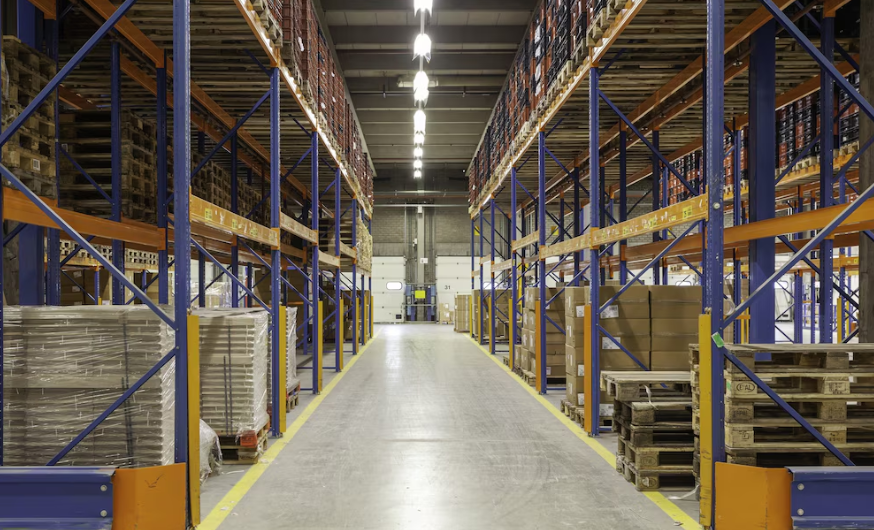
A warehouse management system can direct locations, replenishment, picking, and cycle counts. An order management system can route orders by stock and promise. API connections can remove manual order entry. Packing rules can recommend a carton. Carrier rules can choose an adequate service.
These are small decisions repeated hundreds or thousands of times. That repetition is where automation earns its keep.
Calculate the Break-Even Point
Use a basic model:
Monthly automation benefit = labor saved + error cost avoided + shipping cost avoided − software, equipment, integration, and maintenance cost
Then calculate the expected payback period. Use conservative assumptions, especially for labor savings. A system rarely removes every minute shown in a demo.
Also include implementation time and disruption. A cheaper future process can still create a rough month during migration. Protect delivery with staged testing, fallback procedures, and a clean cutover plan.
Most importantly, do not automate a broken workflow. You will get the wrong result faster. Fix the rule first, then let software repeat it.
Renegotiate 3PL Terms Without Creating Friction
A 3PL rate card is not a natural law. Pricing reflects the work your account creates, the space it uses, its predictability, and the provider’s commercial model.
Review:
- whether receiving is charged per pallet, carton, SKU, unit, or hour;
- whether storage is billed by pallet, bin, shelf, or cubic meter;
- how first-item and additional-item picks are defined;
- packaging costs and material markups;
- monthly account fees and order minimums;
- peak-season and special-project charges;
- return inspection and restocking;
- carrier rates, margins, and surcharges;
- charges for relabeling, kitting, photos, or manual exceptions.
Then improve the work you send to the provider. Accurate forecasts, clean inbound cartons, stable packaging rules, sensible SKU data, and fewer last-minute projects can support better pricing. The negotiation becomes “we made the account easier to operate” rather than “please cut your margin.”
When comparing order fulfillment services, ask each provider to price the same order profile. A headline pick fee tells you very little if storage units, packaging, minimums, and shipping margins differ.
Put Operational Definitions in the SLA
|
SLA Item
|
Definition to Agree
|
Cost Connection
|
Evidence
|
|
Receiving turnaround
|
When the clock starts and stock becomes available
|
Prevents inbound backlog and rush work
|
Receipt and inventory timestamps
|
|
Same-day dispatch
|
Exact cutoff, time zone, exclusions, and handoff point
|
Avoids unnecessary premium transport
|
Order, pack, and carrier scans
|
|
Order accuracy
|
Items, quantities, variants, and documentation included
|
Controls returns and reships
|
Scan and claim records
|
|
Inventory accuracy
|
Method, frequency, and acceptable variance
|
Reduces stockouts and cancellations
|
Cycle-count reports
|
|
Peak capacity
|
Forecast process and committed volume range
|
Prevents backlog during promotions
|
Daily throughput report
|
|
Claims handling
|
Required evidence and response timeline
|
Shortens recovery from loss or damage
|
Ticket history
|
|
Reporting
|
Metrics, calculation method, and delivery schedule
|
Makes cost leaks visible
|
Shared dashboard or exports
|
Words like “fast,” “accurate,” and “timely” sound reassuring. Numbers, timestamps, and definitions are more useful.
Cost Cuts That Often Raise the Total Bill
Some ideas look excellent in a spreadsheet because the spreadsheet stops too early.
|
Looks Cheaper
|
What Can Actually Happen
|
Safer Alternative
|
|
Move everything to the warehouse with the lowest storage rate
|
Longer delivery zones and higher parcel costs
|
Compare total cost by destination and SKU
|
|
Select the lowest carrier rate for every order
|
More late, failed, or poorly tracked deliveries
|
Route by promised date and historical performance
|
|
Remove protective packaging
|
Damage, replacements, and negative reviews increase
|
Test smaller or simpler packaging before full rollout
|
|
Hold almost no safety stock
|
Stockouts create cancellations and premium replenishment
|
Set safety stock by demand variability and lead time
|
|
Spread inventory across many nodes
|
Split shipments and duplicated slow stock grow
|
Distribute stable, high-volume SKUs first
|
|
Reduce warehouse labor before improving the process
|
Backlogs appear at receiving or cutoff time
|
Remove wasted steps, then reset staffing
|
|
Switch 3PLs based on the rate card
|
Migration and exception fees erase savings
|
Model identical orders and include transition cost
|
|
Ignore restricted-item and customs requirements
|
Parcels are delayed, returned, or rejected
|
Validate product and destination rules before launch
|
The pattern is pretty consistent. If a saving removes capability rather than waste, it is likely to hurt somewhere else.
A Practical 90-Day Fulfillment Cost-Reduction Plan
Trying to fix the entire operation at once makes it difficult to see which change worked. A staged plan is slower on paper and usually faster in real life.
Days 1–30: Measure and Find the Leaks
Start with a baseline.
- Calculate cost per successfully delivered order.
- Segment orders by destination, SKU count, package, weight, carrier, service, warehouse, and result.
- Calculate dispatch, on-time delivery, damage, order accuracy, split shipment, and return rates.
- Review the ten most expensive order patterns—not just the ten most expensive individual orders.
- Classify the main leak as touches, distance, air, errors, or mismatch.
Do not build a dashboard with 60 metrics because it looks professional. Pick the measures that can change a decision.
Days 31–60: Run Controlled Tests
Choose a few changes with a clear hypothesis.
- Re-slot a group of fast-moving SKUs.
- Test two smaller package formats on suitable products.
- Route a limited destination group through a different service.
- Standardize inbound labels with one or two suppliers.
- Adjust stock placement for products with stable regional demand.
- Add an address or weight check to one risky order group.
Compare the test group with a meaningful baseline. Include cost and delivery performance. A packaging test that saves money but raises damage is not a win. A carrier test that is cheaper and still meets the promise probably is.
Days 61–90: Negotiate, Document, and Scale
Use measured results to revise carrier rules, packaging standards, warehouse procedures, and commercial terms.
Document the new process. Update training and system rules. Add the relevant metrics to a monthly review. Then scale gradually, especially across countries, product categories, or high-volume sales channels.
The final step is boring but important: check again after the next peak period. A process that works in a quiet month may buckle during a campaign.
When China-Based Fulfillment Can Lower Total Cost
A China-based model can work well when products are manufactured by several Chinese suppliers and sold across multiple international markets.
Instead of sending each supplier’s goods separately to a distant warehouse, a brand can consolidate inventory near origin, inspect inbound units, create bundles, prepare export-ready packaging, and route orders according to destination and delivery promise. This may remove upstream shipping legs and reduce duplicated handling.
It may also let the brand keep one pool of inventory for longer. That is useful when demand by country is difficult to forecast. Stock is committed to a market when an order arrives rather than months earlier.
But there are tradeoffs:
- very short domestic delivery promises may require local stock;
- heavy, bulky, low-value products can be expensive to ship internationally one by one;
- batteries, liquids, cosmetics, and other products may have route restrictions;
- duties, taxes, and delivery terms affect the customer experience;
- international returns can be costly;
- marketplaces may impose specific preparation or delivery requirements.
The best answer may be hybrid. Keep predictable, fast-moving inventory near the largest customer market. Hold long-tail or globally distributed stock in China. Route each order according to margin, destination, inventory availability, and promise.
Fulfillment Cost and Delivery-Speed Checklist
Before approving a cost-reduction project, check the following:
- We calculate cost per successfully delivered order.
- We separate warehouse processing time from carrier transit time.
- We know which destinations, SKUs, and order types create the highest cost.
- Fast-moving products are slotted for short, accurate pick paths.
- Inbound cartons arrive with agreed labels and data.
- Packaging is tested for dimensions, labor, and damage.
- We track billed weight against actual weight.
- We measure and investigate split shipments.
- Inventory placement reflects demand and SKU affinity.
- Carrier rules use the delivery promise and order profile.
- We track first-attempt and on-time delivery by service.
- Scan or validation controls protect order accuracy.
- 3PL fees and exceptions have clear definitions.
- SLA metrics have timestamps, formulas, and evidence.
- Every test has both a cost target and a speed guardrail.
Conclusion
Lower fulfillment cost does not mean squeezing every line on the invoice. That approach often moves expense into late deliveries, damaged products, split shipments, returns, and customer support.
The better route is to remove waste: fewer unnecessary touches, shorter practical distance, less empty space in parcels, fewer errors, and a better match between each order and the service used to fulfill it.
Start with the total cost of a successfully delivered order. Change one measurable part of the system. Watch both cost and delivery performance. Then scale what works.
If your products are made in China, prepare your monthly order volume, SKU list, package dimensions, destination mix, current costs, and delivery promise before you request a tailored fulfillment quote. Good data makes the comparison faster and far more useful.
FAQs
1. What is the fastest way to reduce fulfillment costs?
Start with the biggest measurable leak rather than cutting every fee. For many brands, that is oversized packaging, poor carrier allocation, slow-moving inventory, or too many manual exceptions. Choose one order segment, test a change, and monitor total cost, dispatch time, on-time delivery, and errors together.
2. How do you calculate fulfillment cost per order?
Add receiving, storage, picking, packing, materials, shipping, technology, minimums, returns, reships, and fulfillment-related support. Divide the total by successfully delivered orders. You can also calculate warehouse-only cost per order, but keep it separate so shipping failures and returns do not disappear from the analysis.
3. Can a 3PL lower costs for a small ecommerce brand?
Yes, when the 3PL’s shared warehouse, labor, systems, packaging, and carrier options replace higher in-house costs. It may not be cheaper when order volume is tiny, products require unusual handling, or minimum fees are high. Compare the same order profile and include onboarding, storage, exceptions, and shipping.
4. How can I reduce shipping costs without increasing delivery time?
Improve warehouse dispatch, right-size parcels, place suitable inventory closer to demand, and allocate carriers by destination and promised date. Faster processing can create enough time to use a less expensive transport service. Measure on-time delivery and first-attempt delivery rather than relying only on published transit estimates.
5. Does using multiple warehouses always make delivery cheaper?
No. More warehouses can shorten delivery distance, but they also divide inventory. That can increase safety stock, stockouts, transfers, storage minimums, and split shipments. A multi-node network works best when regional demand is stable enough to support the extra inventory and operating complexity.
6. How does dimensional weight affect fulfillment and shipping cost?
Dimensional weight converts parcel volume into a billable weight. When a package is large for its actual weight, the carrier may charge using the higher dimensional figure. Right-sized cartons, mailers, and cartonization rules can reduce billed weight, but packaging must still protect the product.
7. Which fulfillment fees are usually negotiable?
Negotiation may cover receiving units, storage method, pick tiers, minimums, packaging markup, account fees, special projects, return handling, and carrier pricing. The result depends on volume, product profile, forecast quality, and operational complexity. Ask for exact definitions as well as lower numbers.
8. How can inventory management reduce fulfillment costs?
Accurate inventory prevents cancellations, emergency replenishment, unnecessary safety stock, and wasted picks. Better placement can also reduce delivery distance. Use SKU velocity, regional demand, lead time, product affinity, and stock accuracy to decide where products should sit and how much inventory each location needs.
9. When should an ecommerce brand automate fulfillment?
Automate when a stable, repetitive task creates enough labor, error, or shipping savings to cover software, equipment, integration, and maintenance. Start with scanning, routing rules, replenishment alerts, and packaging recommendations. Large machinery makes sense only when sustained volume and a clear payback support it.
10. How can brands sourcing from China reduce fulfillment and international shipping costs?
They can standardize supplier labels, consolidate inbound stock, inspect products near origin, prepare final packaging once, pool inventory, and choose shipping by destination and promise. Direct fulfillment from China suits some global orders, while local stock may be better for concentrated demand and very fast delivery expectations.
 Want to know about our services, fees or receive a custom quote?